


How Autonomous Testing Expands Continuous Testing
Continuous testing transformed software delivery by embedding automated testing throughout the SDLC. It helps teams catch issues earlier, accelerate releases, and maintain quality across CI/CD pipelines.
Autonomous testing builds on that foundation by applying AI to orchestrate, execute, analyze, and optimize testing workflows automatically. Instead of managing multiple tools, maintaining scripts, and manually coordinating test execution, teams can define testing goals in natural language and let AI handle the complexity.
With BlazeMeter and Perforce Autonomous Testing, teams can:
- Expand test coverage without increasing headcount.
- Reduce manual effort across test creation and execution.
- Minimize script maintenance and test fragility.
- Unify functional, performance, mobile, and API testing workflows.
- Accelerate release confidence with consolidated reporting and insights.
Continuous Testing vs. Autonomous Testing
What's the difference?
Continuous testing remains essential for modern software delivery. Autonomous testing enhances continuous testing by reducing operational complexity and enabling teams to focus more on innovation and less on test maintenance.
| Continuous Testing | Autonomous Testing |
|---|---|
| Automates testing throughout the SDLC | Automates and orchestrates the entire testing lifecycle |
| Requires teams to create, maintain, and manage tests | Uses AI to generate, adapt, and optimize tests |
| Relies on testers and engineers to coordinate workflows | Uses AI to coordinate execution across testing types |
| Provides rapid feedback in CI/CD pipelines | Provides rapid feedback plus intelligent analysis and optimization |
| Helps teams move faster | Helps teams scale quality with less manual effort |
CI/CD-Ready Testing Across Every Layer
Run web, mobile, and enterprise app tests at speed with built-in integrations and reusable scripts.
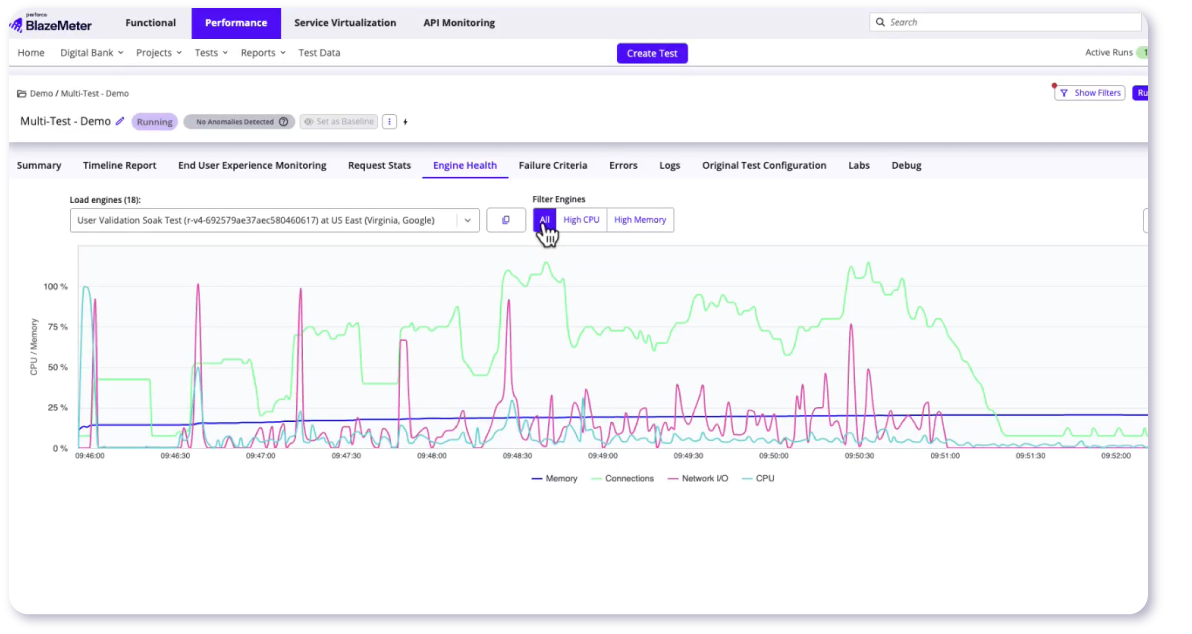
Simulate real-world traffic and catch performance bottlenecks before production.
- Reuse JMeter scripts across tests and teams
- Identify latency and throughput issues early
- Continuously validate performance inside your CI/CD pipelines
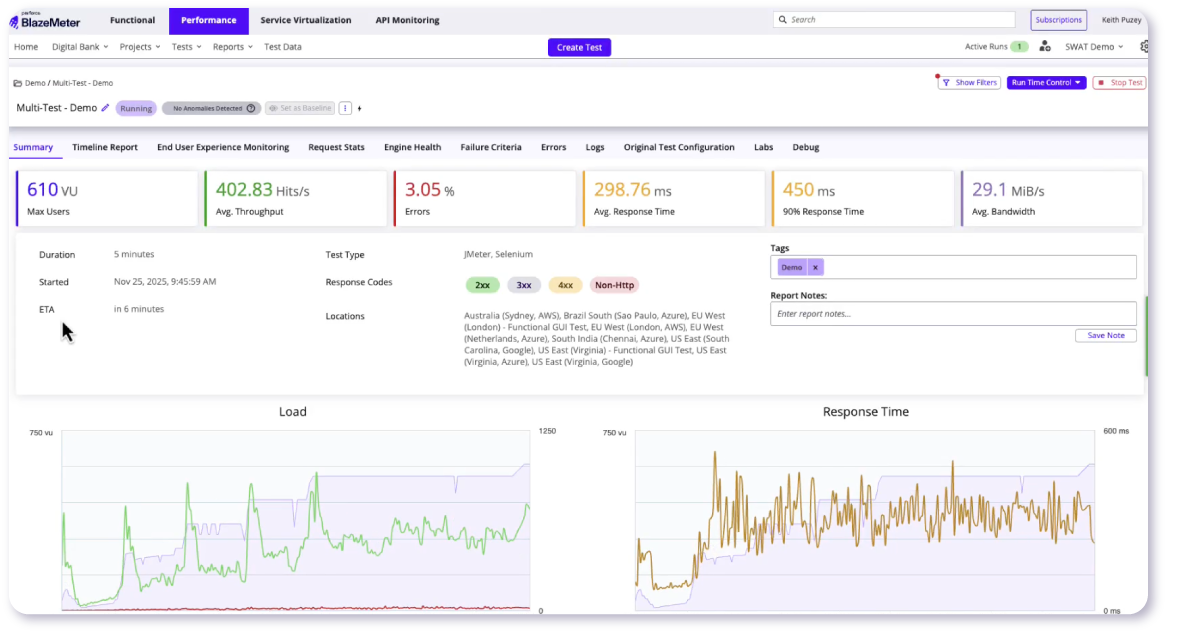
BlazeMeter Service Virtualization enables teams to test without environment blocks. No need to wait for staging environments or complete backend systems to test efficiently.
- Simulate web, mobile, and API environments in real-world conditions.
- Reduce environment risks and maintain stability under peak loads.
- Use virtualization for functional, performance, and UX testing.
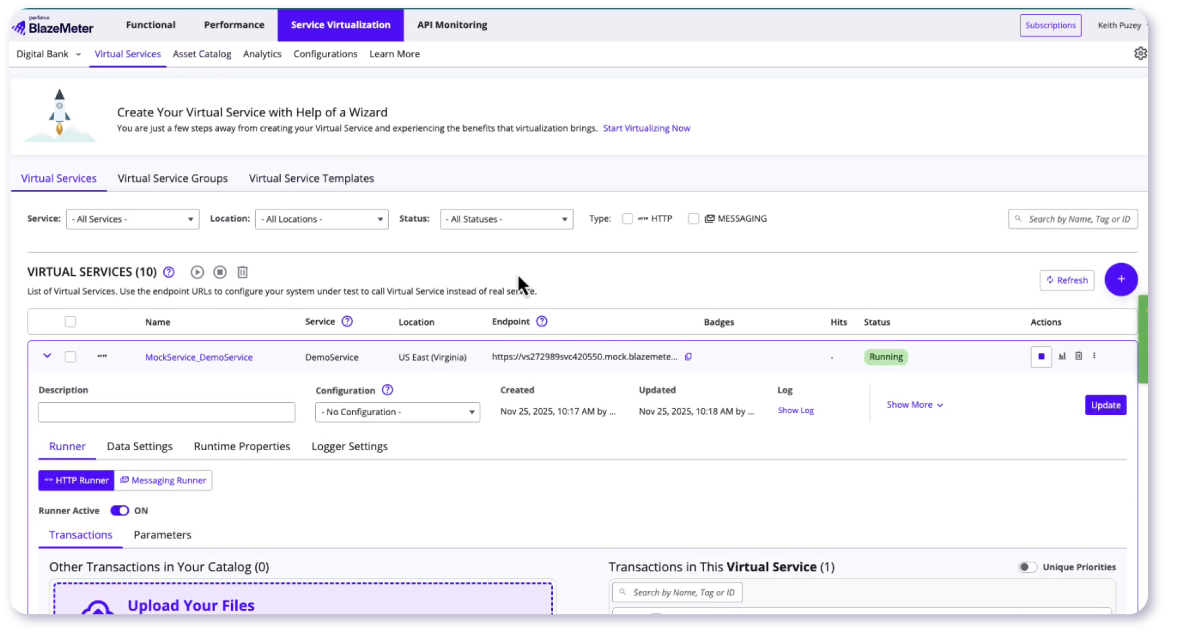
BlazeMeter provides on-demand, compliant datasets for all types of tests—functional, performance, and negative test cases—without manual intervention. Keep your releases on track with immediate, reliable data.
- Quickly unblock QA workflows.
- Manage edge-case testing effortlessly.
- Ensure compliant and reusable data across environments.
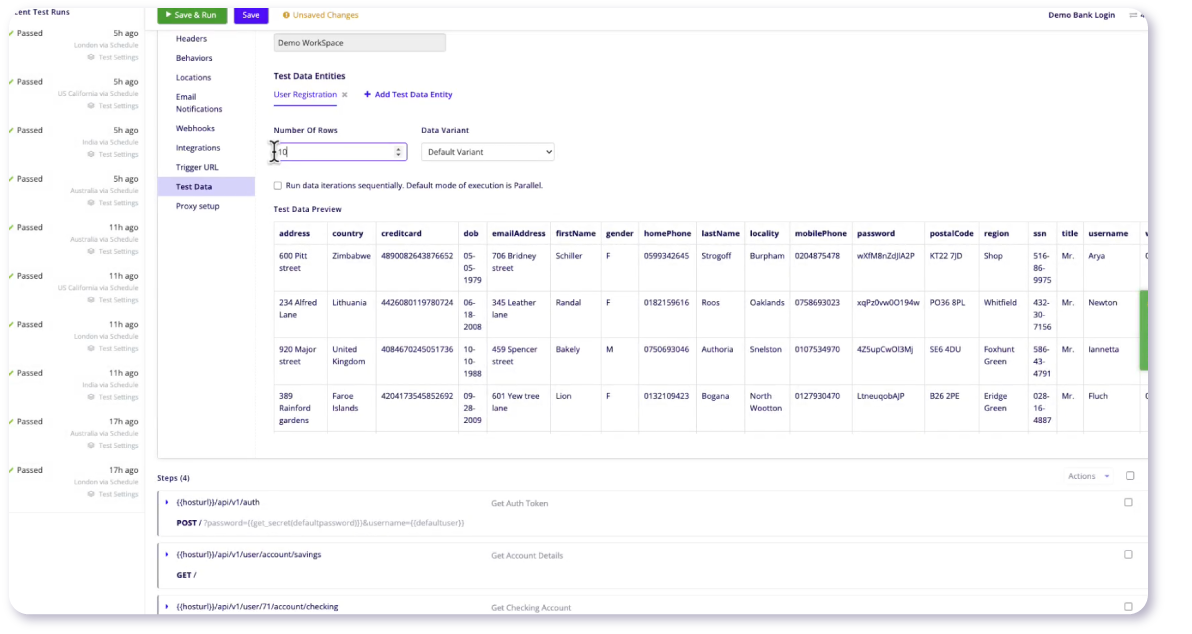
Test apps in real and simulated environments to ensure flawless functionality before release.
- Test accessibility and responsiveness in both real and simulated scenarios.
- Identify usability issues early to minimize rework and maximize customer satisfaction.
- Simplify the process of delivering polished, user-friendly apps.
The Evolution of Continuous Testing
From automation to autonomous testing, the testing journey has evolved rapidly:
Testing occurred late in the release cycle, which created bottlenecks and delayed software delivery.
Teams began automating repetitive tests to improve efficiency and consistency.
Testing became embedded throughout CI/CD pipelines to enable faster feedback and higher-quality releases.
AI now helps orchestrate testing workflows end-to-end. Teams can define objectives in natural language while AI handles test generation, execution, environment configuration, analysis, and reporting.
Ready for the Next Evolution of Testing?
Continuous testing helps teams release with confidence. Autonomous testing helps teams scale testing without scaling complexity. See how Perforce Autonomous Testing enables teams to execute functional, performance, and mobile testing from a single AI-powered workflow.
FAQ
Autonomous testing uses AI to orchestrate testing activities across the software development lifecycle. Rather than requiring teams to manually create, maintain, and coordinate tests, autonomous testing helps automate test creation, execution, analysis, and optimization while supporting functional, performance, and mobile testing workflows.
Continuous testing focuses on executing automated tests throughout the SDLC to provide fast feedback. Autonomous testing builds on continuous testing by using AI to coordinate testing workflows, adapt tests, analyze results, and reduce manual effort required to manage testing programs.
No. Autonomous testing does not replace continuous testing. Instead, it extends and enhances continuous testing by helping teams automate additional testing activities and reduce operational overhead. Continuous testing remains the foundation, while autonomous testing adds intelligence and automation on top of it.
Yes. AI can enhance continuous testing by helping automate test generation, optimize execution, analyze results, identify patterns, and reduce maintenance effort. BlazeMeter already incorporates AI-driven capabilities designed to improve testing efficiency and quality.
Autonomous testing helps reduce maintenance by automatically adapting to application changes, orchestrating workflows, and minimizing the need for manual script updates. AI-driven approaches can reduce repetitive maintenance work while helping teams maintain broad test coverage as applications evolve.
Autonomous testing is ideal for organizations looking to scale quality engineering, increase test coverage, reduce testing complexity, and accelerate software delivery without adding significant testing resources. It is especially valuable for enterprise teams managing functional, performance, mobile, and API testing across complex environments.
BlazeMeter provides continuous testing capabilities across performance, API, test data, service virtualization, and application testing. Perforce Autonomous Testing builds upon these capabilities with AI-powered orchestration that helps unify testing workflows through a single intelligent experience.